Sex on the Farm

It can be difficult to warn people that ours is an “X-rated” farm.  Our farm animals do the “wild thing” at the drop of the hat!  Sex is so prevalent on a farm… and an important topic to be able to discuss.

six piglets getting the colostrum, after birth

Piglets delivered and nursing well

We’ve had many an intern turn red and start stuttering when we have to discuss the topic of breeding and mating.  As if it were magic! Our interns are generally, bright, well-educated young people who want to learn organic farming.  We are one of the few farms that offer livestock management as well as the organic gardening aspect. And yet, SEX, is still a forbidden topic.  But the mating management is critical to the success of any farm.

We try to get over that barrier pretty quickly.  We are involved in utilizing high-tech methods to improve livestock for the small, low-tech farm. We want livestock that can survive WITHOUT vets, medicine, special diets, or extraordinary support.  To do this we sometimes use artificial insemination (A.I.) & embryo transfers (E.T.) to get where we want to go.  Thus it is important to monitor their reproductive cycles.

Lowline Bull, Herd Sire

Lowline Angus Beef, full-bodied, grass-based genetics

We are working on returning to the “grass genetics” that allow livestock to thrive on their historically natural forage.  We use DNA testing to identify markers for food efficiency, as well as observation.  You can have two cows, eating from the same pasture.  One will be fat and the other will look scrawny.  The fat one is better at converting her food to meet her needs AND build a reserve. She is a survivor, and it will cost less to support her.  Her’s are the genes we want in our pool.  As long as she has a good temperament. Temperament trumps… be nice or you are off to freezer camp!

In nature, it make take years for those poor survival genes to be weeded out.  In our herd, we cull those animals and don’t allow them in our gene pool.  We have very mellow animals that are generally easy to work with.

Jim tells the interns, “Cows are really a lot like women! They cycle every 21 days, they get bitchy and they get lovey-dovey.” And it is actually true.  One cow will start licking another, and nuzzling, comforting her. You know she is getting ready to ovulate.  Another cow may bawl and bellow all day.. she is really ready to ovulate. Interns have to learn to watch for standing mount. When a cow allows another cow to mount her, without moving away, we know she is ready to breed! (i.e. she will ovulate within 12 hours).

If you know your cows you can figure out what is going on.  We have to identify when they ovulate so that we can do our intervention (A.I. or embryo transfer), or just mark down on the calendar so we know when to expect a calf if she has been exposed to a bull.  Our goal is to get a bull  & cows, who carry the DNA markers we want to encourage, and then eliminate the need for AI or ET. But at this point the numbers are still small.

The current success rate in embryo transfers, in the industrial cattle industry, is 30-40 %.

Our success rate is close to 90%!

We do NOT use hormone injections or patches to bring on a cow’s cycle. Instead we watch for her natural cycle and work with her.   Of course it helps to have a top-notch vet versed in the skills needed. And we pay close attention to the cows diet.  We add kelp meal, selenium, and diatomaceous earth for the micro-nutrients she may need.

We follow our beef cows, our dairy cows, pigs, and poultry.  The goal is to understand the natural behaviors and work with them to breed stock that can survive in the real world.

Such show-off, our tom turkeys

Heritage Bronze Turkey Toms strutting

I was shocked to hear that the turkey one buys in the store… are so large breasted that they can NO LONGER reproduce on their own.  They must be AI’ed to reproduce.  That, to me, is a very precarious situation.  We use A.I. but our goal is to NOT need it. Our heritage turkeys are quite capable of doing their “job”!

I’m reminded of the story of the special dairy cows in Cuba.  There was a line of dairy cows that were so productive that all the dairies used them.  The problem was… when they no longer had access to the special diet that was needed to produce those prodigious amounts of milk, they were in big trouble.  Besides no longer producing volumes of milk, they could NOT even survive. Not on pasture alone.  That line died out.

We were asked to provide vacation backup for some friends; to milk their daughter’s blue ribbon milking goats.  What struck me as terribly funny (funny sad)… when we milked the goats, we had to pasteurize the milk before we could give it by bottle, to the kids the mother goat had given birth to.  The line was so inbred that an organism was in the milk which could damage the babies if they drank milk straight from the mother.

Our farm is focused on the sustainable. It’s a pretty precarious situation to get into if you make yourself dependent on livestock that can’t survive in the real world

When the price for oil shoots up, the agriculture prices supported by oil must increase.  What happens to the price of food?  We’re working to unhook from that price lock.

Beef has gone up 17% in the last two years, and looks to go higher in the coming years.  The beef herds are the smallest they have been since the 1950’s. Between the price of feed and the lack of water, cattlemen have been unable to support their herds and have reduced their stock.  Our Lowlines don’t need feed (grain), they flourish on forage/grass.

So interns come to our farm and learn about the economics of livestock management… at least on a small family farm. Included in that is learning about the sex life of cows… and most importantly, how to talk about it!

another Lowline Bull

Another Herd Sire

Practicing eating!

Caught a picture of our little bull calf.  His muzzle was dripping with milk but he slipped around mom, up to the hay feeder where all the cows were munching away.  He nuzzled up to the feeder and took a bite to check out what everyone was up to.

This slideshow requires JavaScript.

At this age, he is beginning to practice eating forage.  He still does not get much nutrition from it, but his gut is being colonized by the bacteria he will need on board, to help digest the cellulose (tough fibers). That’s what makes ruminates (cows, goats, sheep, etc) such useful creature.  They can take forage on land unusable for crops, and convert it to food.

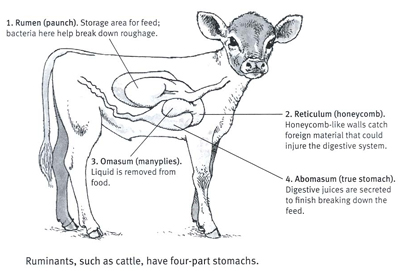
At birth, the four parts of the cow’s stomach are not “active”.  Milk is shunted to the last stomach; the only one that can absorb nutrition from the milk. A calf lifts its head up to nurse, which shuts off the entrance to the other sections of the stomach.  Calves that are fed from a bucket, with their heads down, do NOT shut off that entrance and tend to be very sickly; despite getting milk. They are NOT getting the food into their system.

Commercial cattlemen finally figured out they needed to raise the bucket up and the calves would be much healthier. Such a small observation of how mother nature works, made a huge difference in the health of calves off their moms.

Calf stomach compartments

As small amounts of milk & microbes, from the practice chewing/eating gets into the rumen, it becomes colonized with the different microbes that will handle different types of forage. A different group of microbes for grass, for alfalfa, for orchard grass, or teff, or blends. Once all the areas are colonized, the four compartments have very specialized functions. After eight weeks the calf’s rumen should be fully functioning. The rumen, his bulk storage container where food is first inoculated with microbes to break it down, will grow 25 times larger from birth to adulthood.

One of the things we do is transition any feed changes slowly, over a week or two, to give the microbes a chance to catch up! Otherwise we end up with cows with very “liquid” deposits!

Food/Forage management by poop analysis, would be a “polite” way to put it.

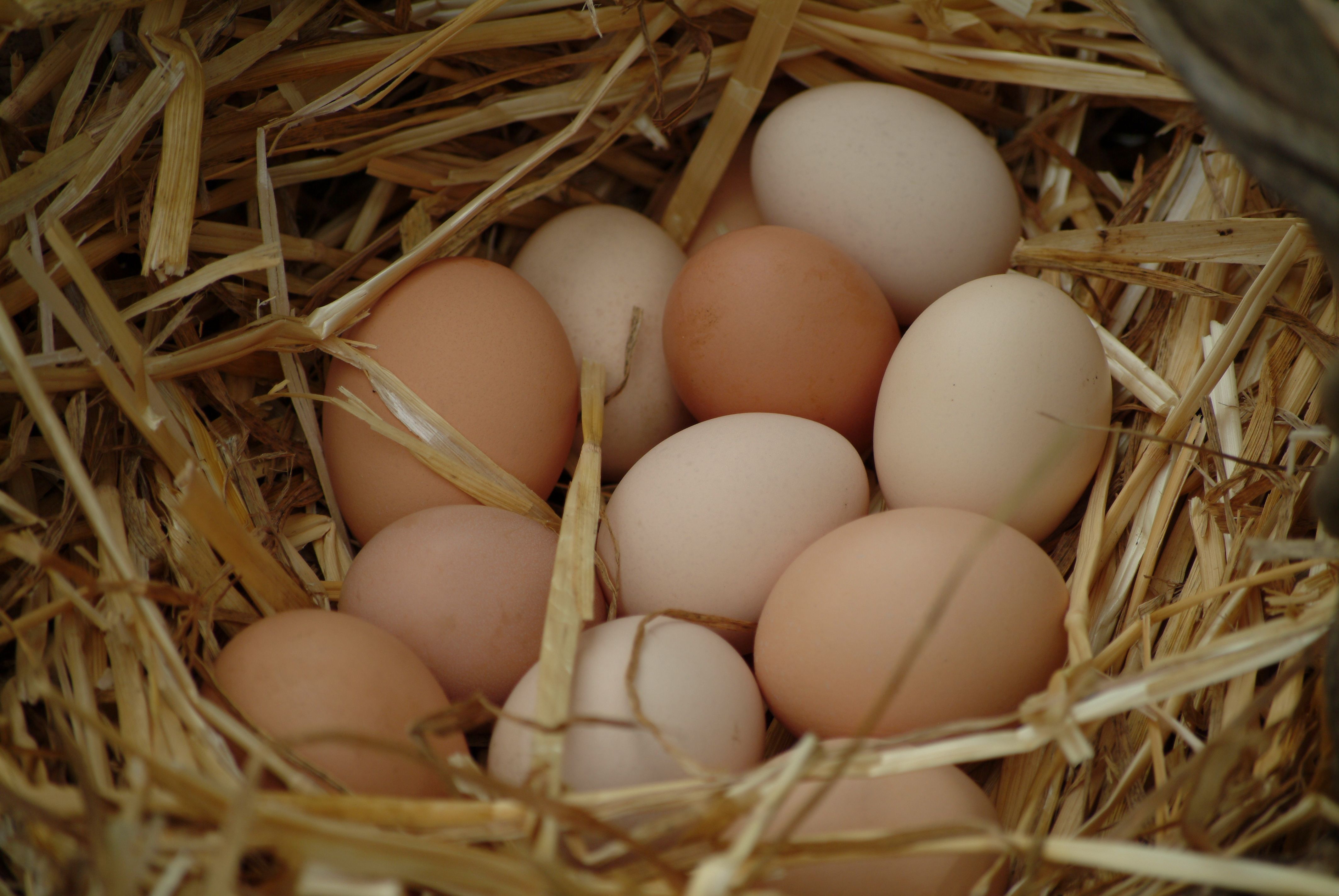
Fresh Eggs, European style

In La Jolla, San Diego (yuppie-ville to the MAX), at the hugely popular farmer’s market, I made the mistake of asking the gentleman who was selling farm eggs, if they had been refrigerated.

Several Hens use the same nest

He lit into me,“You crazy americans, why do you want to refrigerate your eggs! We NEVER do.”

After a minute or so of this tirade he wound down, and I said to him, “I just wanted to make sure they had NOT been chilled”.  His feathers no longer ruffled, we exchanged dollars for eggs and I went on my way… amused that he was so fanatical about the issue, but understanding totally where he was coming from.

It’s amazing that all of Europe is not dead or dying considering they consume raw milk and eat eggs that have NOT been refrigerated. And eat fresh veggies and meat that don’t have a USDA approved stamp on them. OMG, don’t they understand how dangerous they are living.. .

uh, wait… I think,.. yes, didn’t I just hear… now… they live longer… and healthier than us americans. With much lower obesity rates, heart disease, or diabetes. What are they doing different? How can that possibly be?

But back to the eggs…

Obviously 100 years ago they did not put eggs in the fridge.  What changed? Why were eggs suddenly going “bad” if they were not retrieved twice a day and immediately washed and put in the fridge?

A little biology… eggs stay fresh enough kept at room temperature (warmer and cooler than that actually) for a minimum of two weeks and probably longer than that.  At least fresh enough for a broody hen to collect her eggs (i.e. lay them) over a two-week period, and THEN start to “set” on them.

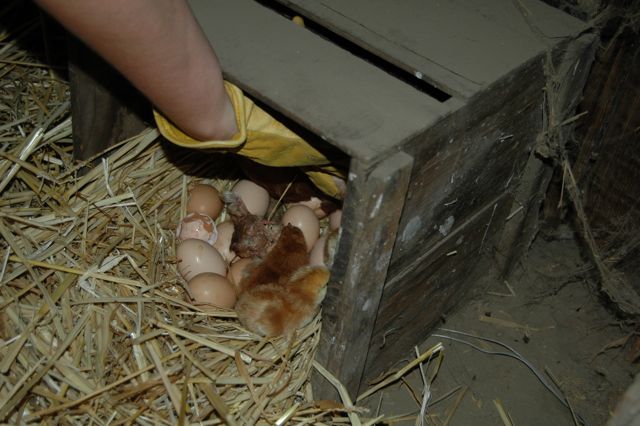
Chicks hatching over two days

They are fresh enough to develop into quite healthy little chicks. I’ve actually seen them do that! Just amazing.

After two whole weeks, without being washed or put in the fridge!

When an egg is laid it has a coating called “the bloom” which is anti-bacterial in nature, and helps protect the future embryo.

When we collect the egg and wash it, we actually remove that protective layer.

Eggs are then placed, in the industrial industry, in a fridge because now the egg DOES need to be protected…  and chilling it prevents bacterial growth.

Eggs are an excellent media for bacterial growth… they use them to grow vaccines, etc., in the medical world.  If eggs are washed they are at risk of being infected with bacteria. Hot water, opens the pores the of egg… and each egg has 3-6,000 pores that enable a chick to exchange O2 & CO2 while it is developing. Those pores now become “freeway systems”.

And what does putting the eggs in the fridge do, washed or not washed? The egg is chilled and when taken out of the fridge moisture condenses on the shell (basic physics here). That moisture can conduct bacteria.

Salmonella bacteria endemic in the commercial populations

Commercial eggs, even so-called free-range, cage-free, pastured (those descriptions have been

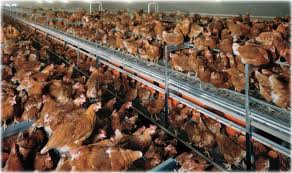
Cage-Free Hens, commercial style

pretty much co-opted by the egg industry) are raised in huge numbers (up to 20,000 hens in a laying house). They are collected, washed, packed, and chilled to go to market. Commercial eggs are fighting an ongoing battle with Salmonella while getting their eggs to market.  Markets that can be hundreds of miles away… and if the trucks were NOT refrigerated, the temps in the summer could get very, very high. High enough, long enough, to trigger the deterioration of the egg itself, or incubate bacterial growth.

I can’t imagine the industrial costs to do all this… a refrigerated truck? But they MUST do it, because the risks are so high.

Farms that have 50,000 thousand laying hens (yes, 50,000 or MORE) must follow specific rules to decrease the risk of Salmonella bacteria, in their eggs. Some 600 hundred farms were to be inspected in 2010-11 . Salmonella is endemic in the commercial egg production population. Egg products (yolk, white, etc), with the shell removed, must be pasteurized. Some large  egg producers are fighting the salmonella problem by pasteurizing ALL their eggs (shell & all).

You should NEVER eat commercial eggs unless they have been well cooked, to protect your family. My mother would get sick even if the eggs were cooked… G.I. upset every time.  We finally figured out she could eat real farm eggs without any problems.  Every time she came to my house, she could eat the eggs, without later running to the ladies’ room.

Down on the Farm

What do I do if I get an egg with “stuff on the shell”? I wipe it off gently.

If it’s totally yucky I wipe if off with a damp room temperature dishcloth, and use it ASAP. If I’m really short on eggs (think winter)… those eggs I might put in the fridge and use them immediately, when I take them out.  I would NOT take a whole carton of eggs out, put them on the counter for a while, and then put them BACK into the fridge. Not if that protective bloom has been removed.

Actually, in my setup for the most part, the eggs would go into the pig bucket because they are extremely high in nutrition and are prized for the food value they give our pigs.

 At our house, we keep things pretty basic.  Eggs are collected, kept at room temp, dusted off but generally NOT washed. Any suspect eggs (very dirty or cracked) go to our pigs. NO WASTE, I just love it!

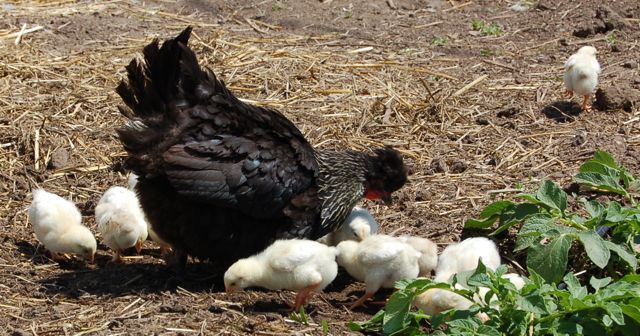
Teaching the chicks, finding food!

Our hens also get their real diet…. i.e. NOT vegetarian.  They run around freely, for the most part (to the dismay of a neighbor occasionally) and eat bugs, worms, etc. as well as a layer feed. They choose. We do protect garden areas, or a neighbor, by putting up an electric net that encourages them to go elsewhere.  They could jump the fence if they wanted to, but for the most part choose to meander where it’s easy to go.

Backyard Chickens are the way to go!

I encourage everyone, raise your own hens! They are great waste disposals; eat just about everything, give you fertilizer and eggs. You don’t have to have a rooster (hens still lay, just the eggs won’t hatch!). Put down a bed of straw to absorb any odors. It makes a great garden amendment when it breaks down, along with the fertilizer  mixed in, from the hens.

If a hen goes broody, let her set on her infertile eggs and after a couple of weeks trade them out. At night, slip some chicks from the local feed store, under her and let her raise them up. GREAT entertainment and fun for kids, dads, moms, & neighbors.

It’s incredible how good fresh eggs are… commercial eggs are  a bland watery substitute for real food. Can’t raise your own… seek out a local farmer who is and support them.  You will get much more for your food dollars, I assure you!

Update: Turkey & the Hen, pt 2

I’ll be dang.  That turkey Hen, after a full week, is still sitting on her eggs*. I say her (almost) eggs because we actually put her eggs under the hen, and gave her fresh chicken eggs to sit on.  If she was gonna run off and visit the “guys” I wanted to be able to save her chicks.  Chicken chicks are pretty easy for us to get, but not turkey chicks, so if we lost  her “chicken eggs” it was not quite a disaster for us.

But, she is finally hanging in there.  I peek in every day (sometimes twice) just to make sure… and she just looks at me. Doesn’t get flustered at all.  The hen gets pretty grouchy at me if I try to check her eggs. She rustles up her neck feathers and tries to peck me if I get to close.  She’s definitely into protecting her (turkey) eggs. Her eggs were actually moved to the incubator, along with some turkey eggs as there were too many eggs for her to sit on.

The Alternate Surrogate – an incubator!

A couple of days ago we had a surprise in the incubator, the hen’s eggs are starting to hatch!  A constant churp-churp-churp alerted us to a hatching chick.

We’ve been struggling a bit with the incubator, at the start, to make sure we had the temp in the right range… 99-100 degrees F, so I was SURE we had killed off the developing chicks. Nope, tough little guys.  It turns out they can tolerate short periods of temps down to 90 degrees for hours. It may slow the hatch but high temps (103  F) for even 30 min, will kill the embryo.

Temp & Humidity Levels

We bought an instant read digital thermometer with a probe that went into the incubator.  It would give us the internal temp and the humidity level.  Things you need to know… and difficult to actually find out WITHOUT opening the top of our little incubator. Every time you remove the top you alter the very things you are trying to keep stable.

The little funnel you see in the top of the lid gives us access to putting water inside to increase the humidity level WITHOUT opening up the unit. The humidity inside the unit needs to be in the 55-65% range or else the growing embryo’s get too dry and stick to the membrane inside the egg.

We use an automatic turner in our forced air incubator. The mother hen normally turns the eggs multiple times a day, to keep the embryo from “sticking” to the internal membrane. If the eggs are NOT turned consistently you end up with a very poor hatch rate. Years ago we started out turning them manually but as soon as we could afford to add the “turner” we did. You are supposed to stop turning the eggs for the last three days, but out little hatchling did just fine.

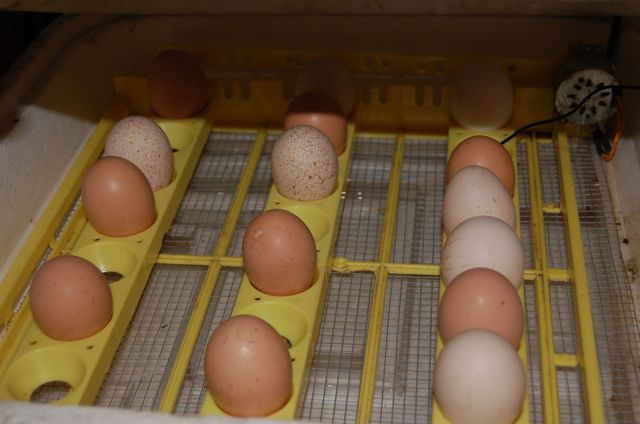
Automatic Turner w/eggs

You can see the chicken and turkey eggs (light speckled eggs). They are placed in the slot with the large rounded end up.

There is an air pocket inside the egg as well as the yolk, the clear ‘white”, and the embryo surrounded by a white layer. Did you know that the yolk is NOT the chick? It is the food the chick will use while it is developing. Just before it actually hatches, it draws the rest of the yolk sack into its gut, and uses it for food, for the first couple of days, after it is hatched.

Chicks do not need food or water the first two days, which allows them to be shipped all over the country, from hatcheries. They draw on the yolk reserves for their energy needs.  Now, of course nature did not design this process for OUR use… so why does it work that way?

People are often astounded when I tell them that Hen’s do NOT sit on their eggs right away. But instead, lay eggs for up to 1-2 weeks before sitting.

Think about it.  A hen, at most, lays one egg a day. If it takes 21 days to hatch a chick, and she was sitting on 10 eggs, starting from the day she laid the egg, she would have chicks born over 1-2 weeks.  How could she keep her unborn chicks warm AND take care of her new chicks.

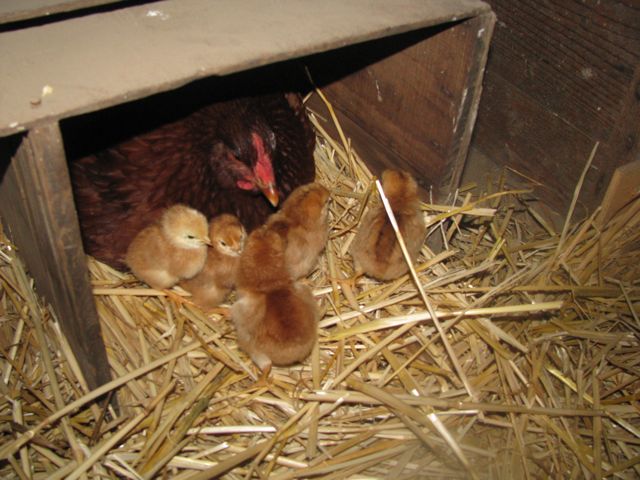
Momma Hen with her new chicks

Actually, she lays a clutch of eggs over a couple of weeks, and THEN she sets.  That way all the eggs are “warmed up” beginning at the same time.

They generally hatch over a two-day period (maybe some were at the outer edge and weren’t quite as warm so the hatch is slightly delayed).

As the chicks begin to hatch they stay under mom to keep warm.  After two full days she will then leave the nest. Any eggs that have not hatched, are left.  It’s time for mom to take care of her new hatchlings. The oldest chicks have two days food supply on reserve but after that mom needs to show them how to scratch and eat/drink.

So, contrary to public opinion, eggs do NOT have to be kept refrigerated to be fresh. If an egg can sit in a nest for two weeks and still be “fresh” enough for mom to set … and hatch out a clutch, I bet they are still good eggs.

In Europe, it is unheard of to put eggs in the refrigerator… you must WARN people, by law, if you do that.

What’s the deal?  I’ll address those issues in my NEXT post!

The Turkey and the Hen, pt 1

You can check back and read the first post on this little adventure, A Surrogate Mother, if you want more background info.  At this point we have a turkey hen who STILL wants to lay her eggs and sit on them.

Sitting on them long enough, is the real issue.  She does very well for a few days and then will leave.  Those eggs need to be kept pretty consistent at 99.8 degrees F to actually hatch, for 28 days. I mean, I’m sure they can tolerate some lower temps, when mom goes to eat/drink… but they cannot end up being stone cold before she gets back.

ERGO, my broody hen was called in to help out. She, who is content to “sit”, almost forever (one time for close to 60 days).  That time we brought HER food and water to make sure she was getting enough, she was so dedicated to her egg-sitting.

As I mentioned in the earlier post, we took the hen’s eggs that she was sitting on and put them in the incubator.  We took the turkey eggs and put them under the hen.  Turkey chicks are pretty fragile and do much better being raised by a hen, then by ME.

Now, the latest. This Midget White Turkey is obsessed.  She keeps wanting to sit on some eggs.. but unfortunately, she’s not exactly dedicated to the job.  She also likes to “flirt” with the guys… so will take off, forgetting all about her eggs.  When she remembers and heads back to the nest… she looks around for the eggs.

Bunk-bed sitting hens

On discovering that the HEN had eggs, she promptly set on the hen. I mean, actually climbed on top of the hen, and was sitting on her. Our broody hen would NOT budge. (did I mention the word dedicated????).

They did finally share side by side, with each keeping eggs warm. I hope the embryo’s are pretty sturdy to handle all the “action” they have been getting.

The turkey’s last visit back to the sitting area, she created a new nest and laid more eggs. Now we have way too many eggs for that little hen to sit on, plus the timing was going to be all off.

We took these newest turkey eggs, marked them, and put them in the incubator, to see if we could save them.  Maybe I’ll have another hen go broody (we’re certainly having spring like weather)… and can slip them under her before they hatch, and she can raise them.

Milking Chocolate

Henry, at 2 weeks old, waiting while mom gets milked today.

At two full weeks, Chocolate was still leaking milk from her udder.  Obviously she still had much more milk than the calf could use so we decided to go ahead and start milking her.

The first time she was not too thrilled… until she saw some GRAIN.  Then she willingly went into the milking trailer. She fussed a little bit (we put a hobble on so she could not kick), but after the first milking she got into the rhythm of it… and no longer tried to kick.

I guess we were taking a little toooo long, the first time. When she was DONE, she was DONE. Uh, never mind that WE WERE NOT. She backed herself right out of the stall with the milking equipment still attached. Our poor intern was thunder struck. All I could do was laugh; it had happened to me in the past. Go with the flow. BUT, have to get the head stall bar put back in, so she could not back out of her own free will.

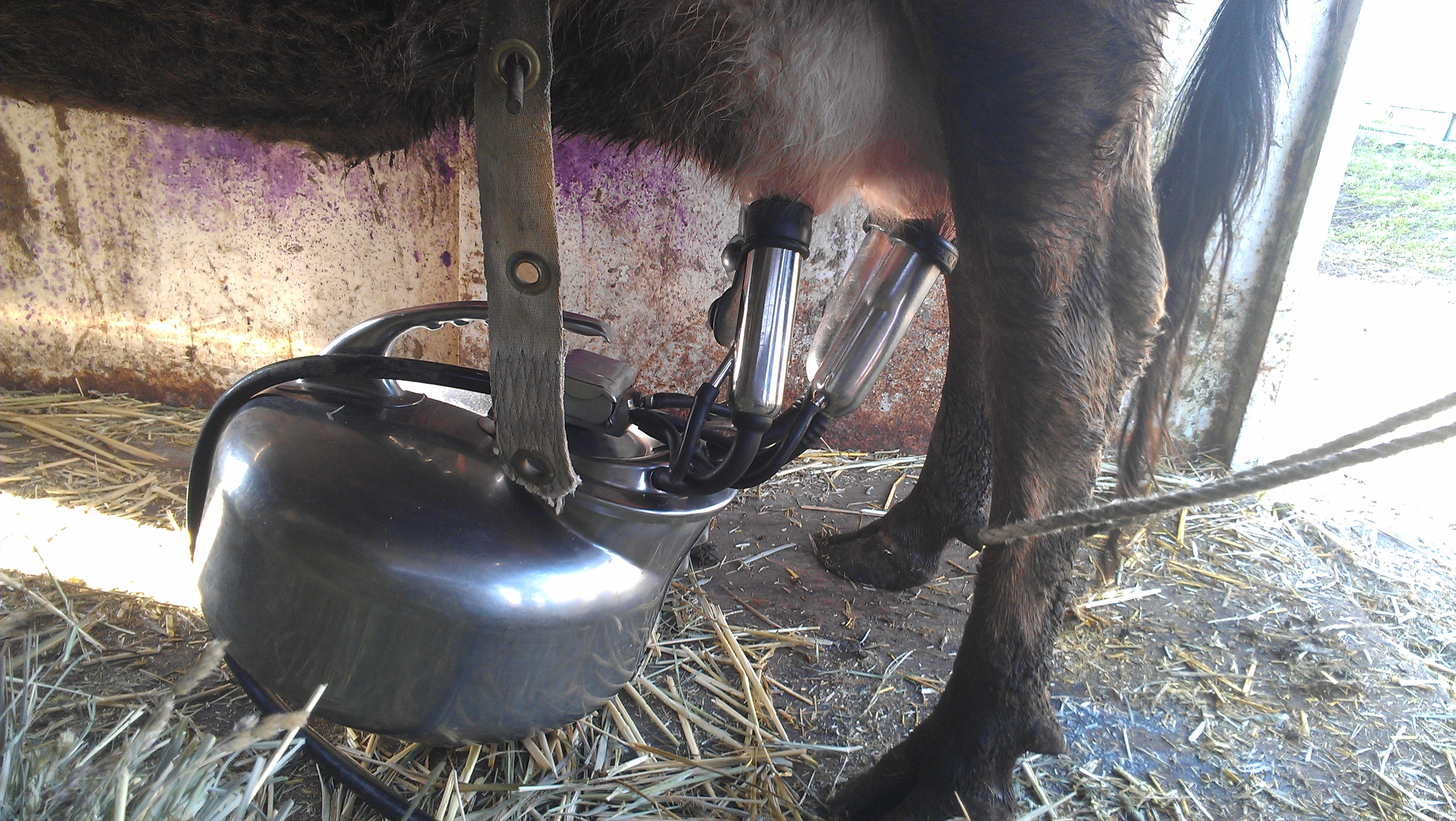
Portable Milker attached

In the picture you can see the silver Inflaters, on the teats, which pulsate with a light rhythmic vacuum, and milks the cow out in about 10 minutes, into the large bucket. It is suspended from a back-strap… and goes with the cow when she moves around in the stall. The time consuming part is the cleaning of the udder and the teats to insure they do not contaminate the milk.  The bucket is taken directly back to the house, filtered, and refrigerated.

COMMERCIAL DAIRIES have it backwards!

I was shocked at another dairy, impressively spic and span (sterile almost), to see them do virtually no cleaning of the udder/teats. What they did do, left drainage on the teat that would be pulled into the milking lines.  Now I KNOW why they MUST pasteurize their milk. I would never drink raw milk from such an operation.

We also pay extraordinary attention to the proper cleaning of the equipment, after use, to prevent any source of contamination building up. Understanding  clean aseptic technique is critical. It reduces the transference of organisms, rather than killing every living thing.

Why don’t I keep a pristine clean milking stall? Because 99.9% of microbes are either beneficial or benign (i.e. don’t cause a problem).  If I kill them off all the time (with chemicals, etc.) I am providing a petri dish to grow bad bugs. Those bugs that can survive my killing chemicals!  In nature, there is NO such thing as an empty niche. Odds are, over time, it will be a bad bug we can’t kill off.

With good “aseptic technique” we prevent contamination in the first place.  Any milk that is questionable goes immediately to the pigs… nothing is wasted and there is no urgency to preserve every drop for our personal use. We err on the side of caution… something the industrial business model does not always follow, sad to say.

GRAIN 

Interestingly, during Chocolate’s pregnancy she had NO interest in grain. Now remember, she is an “Old World Jersey”, a heritage breed that has not been quite as domesticated as standard jerseys.  Her body mass is fuller (standard jersey’s can look emaciated as they put all their energy into the udder/milk process). She has more reserves (more meat on her bones).  She does NOT produce as much milk as a standard jersey.  She does well on pasture and has not been bred to need grain.

During her pregnancy she was quite uninterested in any grain, but now that she is producing milk, she has developed a distinct “LIKE” for grain.  She’ll get a small amount, a scoop (couple of cups) each day along with hay, with her milking. I’m guessing that  with the extra milk production she needs more “energy” to provide it. Or, if not needing it precisely, she likes it.

We also add in some kelp meal & D.E. (diatomaceous earth) to her daily ration.  They provide her with micro nutrients that might be missing in the soil the hay was grown in.  The D.E. also functions as a natural dewormer that we use with all our livestock.

Predators have 2 eyes in front!

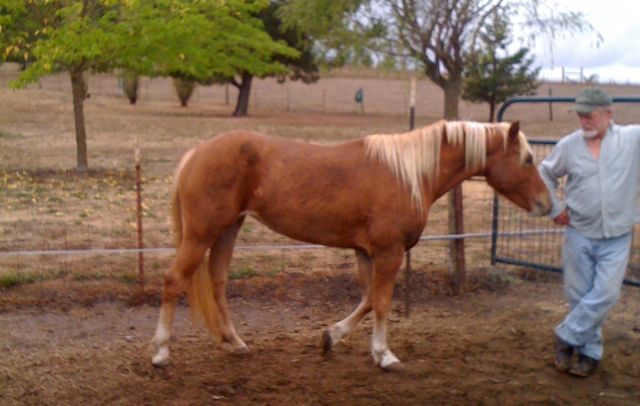
When people visit the farm one of the first things we talk about, before seeing the livestock, is how to interact with our cows and horses (& mini-horses).  We bred for temperament so we start out with fairly mellow livestock… but it’s important to understand where they, genetically, are coming from to avoid triggering survival instincts.

First Day on the Farm - Lady comes to Jim

These animals have historically been prey, i.e. food. They have developed some pretty strong instincts that allow them to survive in the wild. Animals (predators) that hunt them down have two eyes, that work together in front, that will stare at them!

Prey (future dinner meal) animals have eyes that look to the side and each eye actually works independently. One eye can look behind and the other can look ahead… almost 360 degree vision. AMAZING.  Their brains can make some sense out of this information. Safety & survival.

If your eyes are in front, you can’t see behind you or to the side very well, without turning your head.  But two eyes working together are better at judging distance, when you are in attack mode!

We had a cow who, I swear had surround vision! She could, with one eye, watch her food, and with the other eye, wait until we were in kicking range while milking. Grrr-r-r-r.

Predators also reach out with a stretched out open paw, claws extended, to attack. Guess what people automatically do? Reach up and out with extended fingers, to touch livestock on the head.

Prey animals are very sensitive to certain movements that humans make so we try to decrease their stress by encouraging visitors to do several things. Our goal is to make “socializing” positive for both sides, human and animal.

Methods:

One, don’t look directly at the animal (with both eyes) until they have been introduced to you. When

Don't Look DIRECTLY

looking directly at them (with both eyes) look away occasionally, to take the stress off them. I’ll turn my head slightly, so they can only see one eye.

I still do this with a “new mom” as she may be extra nervous with a newborn calf at her side.

Two, don’t reach up and out with an open hand, to touch the animal.  Put your hand out down low, with the back of your hand showing (fingers tucked away)… and let the animal reach out to you and sniff your hand.  THEN you can turn your hand over, and touch them. They can be incredibly sensitive & gentle with their muzzles.

Three, talk quietly, slowly, and in low tones. High pitched tones come from bobcats, etc!

Four, move slowly, and give them time to adjust to where you are moving to. ALWAYS let them know, quietly, if you are directly behind them to avoid spooking them. (They cannot see directly behind themselves.) FAST movements are perceived as a threat (predator after them).

Using these techniques works well.  The other interesting thing.. you don’t actually have to go directly up to the animal.  If you stand or sit still, they will come to you. They are incredibly curious and as long as they don’t perceive you as a threat… they will want to meet YOU.

Teasing Chocolate… being a bad boy!

Our Cocker Spaniel, Mick, loves to play with the new calf.  He thinks it’s HIS new playmate.  But mom has other ideas.  Because Mick has front eyes, moves quickly, and makes “attack” movements, she see’s him as a threat to her baby (despite knowing him since he was born!).

He’s making a nervous wreak out of our new mom. Poor Mick… he get’s put on a leash so that he will NOT tease Chocolate.  He’s only allowed to go out “under supervision”!

Newborn calf doing well!

Our area got hit with over 6 inches of rain!!! It quickly creates a river that runs between the house and the barn, and pools into a shallow lake in the pasture.  We’re quite lucky that the pasture area drains fairly quickly.  Despite it being winter this was a relatively warm storm.  No freezing temperatures.

Glad that our newborn calf had a few days of warm, dry weather before the start of the rains.  He handled the change in weather without a hitch.  Kicking up his heels and playing…. instead of curled up in a miserable lump as I fantasized.  It’s a pretty human characteristic, to super-impose our reactions onto animals.

Barns are mostly for people… for storing items like tools, hay, feed, etc. We don’t use the barn for our livestock. Overall, it’s not healthy for them.  Cows, horses, etc. prefer the outdoors and tend to choose a tree or windbreaks for their shelter.  Livestock closed up in a barn are at risk for respiratory problems… the build-up of manure and urine produces fumes that are irritating to their lungs. They have survived for tens of thousands of years… outside.

Well, except for our chickens who are closed up inside the barn at night, but only because it was a convenient place to put an enclosed cage to protect them from predators. Not that THEY needed the barn. It could be in a chicken tractor, outside. Now, our weather here in coastal california is rather mild.

We don’t have drifts of snow for livestock to dig through, looking for food and water.  Instead our chickens, turkeys and guinea hens roam freely, except at night, where we have closed down The Heritage Barn Chicken Buffet that a Red Fox, last year, helped himself to.

The calf did not miss a beat… he frolicked and played in the rain. His coat is thick and water-resistant, seemingly untouched by the steady rain.  We had three days, off and on, of rain.

halter, calf, train

Halter Training

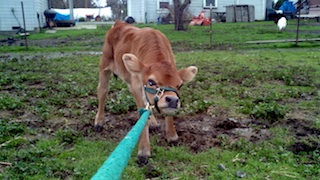
Of course, then it came to the time to put a halter on the calf and get him used to being led around.  You can see from the picture how excited he was about this new adventure. He actually acclimated rather quickly and our intern was able to led him around the pasture.

Niki, our intern, also discovered the easiest time to put the halter ON.  When the calf was napping!

They are almost dead to the world.  You can do just about anything to them and they don’t wake up.  And mom has usually parked the calf, for his nap, and she’s gone off to eat so she’s not there to run interference in putting a halter on her baby.

We’ll try to lead him around a short while each day… and spend time with him, socializing.

Then he is let off the lead rope, races over to mom, and get’s a comforting drink of milk!

Newborn calf’s first steps, pt 2

The calf finally balances enough on his little legs, to actually MOVE around!

Newborn calf’s first steps, pt 1

http://youtu.be/xzGXjXBI-SI

You can hear the pig in the background… he was SO curious about what was going on!

« Older entries Newer entries »